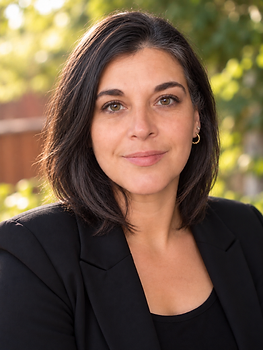
 Fig. 01 — The author
Dena
Mae
- Author
- Human Wellness Advocate
- Domestic Violence Education & Prevention
- Researcher of Human Behavior, Relationships & Personal Development
Dena Mae writes about one of the subjects she finds endlessly fascinating: the human experience.
Her work explores the intersection of personal wellness, relationships, behavior, trauma, self-awareness, spirituality, social conditioning, and the environments in which people live. Rather than treating wellness as a single practice or destination, Dena approaches it as an ongoing process of learning to understand ourselves—our bodies, behaviors, relationships, histories, environments, and choices.
Her writing is rooted in curiosity.
- Q.01
Why do people behave the way they do?
- Q.02
How much of what we believe about ourselves was actually taught to us?
- Q.03
How do relationships and environments influence our nervous systems and behavior?
- Q.04
Why do unhealthy patterns repeat across individuals, families, organizations, and sometimes entire communities?
And perhaps most importantly
Once we recognize a pattern, what can we do differently?
Writing About Wellness as a Whole Human Experience
Dena's books and educational work examine wellness through multiple lenses rather than reducing human health to a single philosophy.
Her approach encourages readers to remain curious rather than blindly accepting any single explanation—including her own.
She believes meaningful personal development requires the willingness to examine what we have learned, recognize what is helping or harming us, seek credible information, listen to our own experiences, and remain willing to change our understanding when better information becomes available.
Lenses her writing has explored
The Living Bibliography
Educational tools for examining patterns, healing, and becoming an active participant in your own life.


Recognizing the Pattern. Choosing the Change.
Dena's work includes domestic-violence education and prevention, survivor support, and trauma-informed perspectives. The through-line is recognition: learning to see what is happening, and then learning what can be done differently.
Understanding domestic violence
Domestic violence is not limited to physical harm. It can include emotional and psychological abuse, isolation, financial control, monitoring, coercion, and threats. It crosses every age, gender, income level, culture, and education level. Naming a pattern accurately is often the first step toward changing it.
Spotting the change
Patterns rarely arrive all at once. They accumulate: distance from friends and family, fear of someone's reaction, blame that always lands on you, walking on eggshells, or losing trust in your own memory. Sometimes the change to spot is not in someone else—it is the moment you stop explaining away what you already feel.
Learning to heal
Healing is not linear, and no single philosophy owns it. It can include safety planning, professional support, rebuilt relationships, nervous-system care, and the slow work of trusting your own perception again. The goal is not to become a different person. It is to become an active participant in your own life.
Questions people carry.
Clear language for the things that are often hardest to name.
What are the signs of domestic violence?
Signs can be physical, but they are often relational and psychological: isolation from support, monitoring, threats, financial control, humiliation, blame-shifting, and fear of a partner's reaction. No single sign proves abuse—a pattern does.
How do you begin healing from domestic violence?
Safety comes first. From there, healing usually combines professional support, trusted relationships, practical stability, and time. It is rarely a straight line, and it does not require having every answer before you begin.
What does it mean to spot change?
Spotting change means noticing the shifts in a relationship or in yourself before they become normalized—the moment fear replaces ease, or the moment you recognize a pattern you have been explaining away.
If you are in danger
Contact local emergency services. In the U.S., the National Domestic Violence Hotline is available 24/7 at 1-800-799-7233, by texting START to 88788, or at thehotline.org. This page is educational and is not a substitute for professional or legal advice.
More Than an Author
Dena's perspective has been shaped by work extending beyond writing.
Professional experience
- Wellness
- Coaching & education
- Business operations
- Organizational development
- Healthcare administration
- Community advocacy
- Human-centered leadership
- Trauma-informed & human-focused systems
Concepts she has worked on
- Domestic-violence education & prevention
- Survivor support
- Relationship health
- Behavioral intervention
- Organizational culture
- Healthcare accessibility
- Community wellness
- Technology that helps people & professionals communicate and identify patterns
Across these seemingly different areas is one recurring question
“How can we build environments that help human beings function better rather than simply expecting struggling human beings to function better inside unhealthy environments?”
That question has become an important foundation of Dena's work.


Fig. 02 — Where disciplines overlap
Lived Experience and Intellectual Curiosity
Dena does not write from the position of having every answer.
She writes as a lifelong student.
Her work combines lived experience with continued study and curiosity across behavioral science, sociology, psychology, anatomy and physiology, trauma, relationships, holistic wellness, philosophy, comparative spirituality, organizational behavior, leadership, and human development.
She is particularly interested in the places where disciplines overlap.
Human behavior does not occur independently of the body.
The body does not exist independently of its environment.
Relationships do not exist independently of culture.
And personal wellness does not exist independently of the systems in which people live.
Understanding those connections has become a recurring theme throughout her writing.
Why Dena Writes
Dena's goal is not to tell readers exactly how they should live.
It is to give them more tools with which to examine their own lives.
Her books invite readers to ask questions, observe patterns, challenge assumptions, develop healthier relationships with themselves and others, and become increasingly intentional about the lives they create.
Some books are educational. Others are reflective. Some explore holistic or spiritual concepts. Others examine relationships, behavior, trauma, or personal wellness.
Educational
Reflective
Holistic & spiritual
Relationships, behavior & trauma
Together, they share a common purpose
To encourage people to become active participants in understanding themselves.